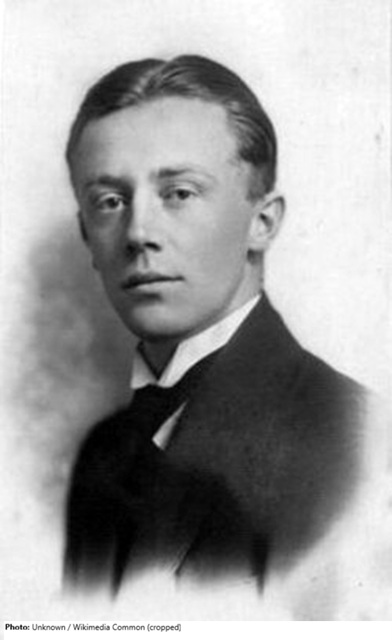
| Roles | Referee |
|---|---|
| Sex | Male |
| Full name | Mihály•Bély |
| Used name | Mihály•Bély |
| Born | 2 June 1863 in Budapest, Budapest (HUN) |
| Died | 25 December 1920 (aged 57 years 6 months 23 days) in Budapest, Budapest (HUN) |
| NOC |  Hungary Hungary |
Mihály Bély was a versatile sportsman and sports instructor. He practiced athletics, boxing, gymnastics, fencing, and football. He received a fencing master’s certificate from József Keresztessy, the founder of the Hungarian sabre school, and competed in the millennium master’s competitions in 1896. In 1892, he held the first demonstration of skiing in Hungary.
As a sports leader and instructor, Bély organized gymnastics festivals for boys’ and girls’ schools in 1908 and fostered the building of gymnasiums for new schools. In 1913, he included the Swedish method of gymnastics in Budapest’s first physical education curricula. Over the next five years, they were adopted for all types of schools in the country. Bély was involved in the development of competition rules for fencing, tennis, gymnastics, figure skating and football. Among his various publications was the first translation of football rules from English to Hungarian.
Mihály Bély married Margit Novák in 1893; they had two sons and two daughters. His son Mihály Jr. (1898-1927) became Hungarian champion in the high jump in 1918. Both of his daughters were gymnastics teachers and avid skiers. His second son became a physical education teacher and author of several publications on sports.
| Games | Sport (Discipline) / Event | NOC / Team | Phase | Unit | Role | As | |
|---|---|---|---|---|---|---|---|
| 1912 Summer Olympics | Artistic Gymnastics (Gymnastics) | HUN |
Mihály Bély | ||||
| Team, Men (Olympic) | Final Standings | Final Standings | Judge |