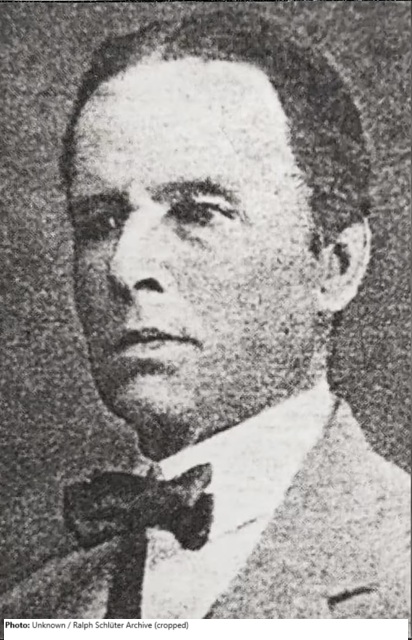
| Roles | Competed in Olympic Games |
|---|---|
| Sex | Male |
| Full name | Harry August•Wahl |
| Used name | Harry•Wahl |
| Born | 17 July 1869 in Hamina, Kymenlaakso (FIN) |
| Died | 31 July 1940 (aged 71 years 14 days) in Helsinki, Uusimaa (FIN) |
| Affiliations | Wiborgs Läns Segelförening, Vyborg (RUS) |
| NOC |  Finland Finland |
| Medals | OG |
| Gold | 0 |
| Silver | 1 |
| Bronze | 0 |
| Total | 1 |
Harry Wahl was born into a wealthy family, which owned the Paul Wahl & Co trading company in the forestry industry founded by his grandfather. He graduated in 1890 from a private lyceum in 1890 and then took up commercial studies abroad, in Germany, England and France. In 1902, he became the director of the family’s company. He sold the company some years later and in 1916 founded a new company, together with one of his brothers owning, amongst others, the Lamposaari sawmill near Lappeenranta.
Wahl was owner and skipper of the Finnish 10 metres yacht “Nina”, which placed second in Stockholm. In a race-off for silver they beat the Russian yacht “Gallia II”. From 1903-07 was Wahl the commodore of the Wiborgs Läns Segelförening and designed a number of successful yachts prior to World War I including the “Nina”. He won the the Sinebrychoff Trophy with the boat “Jolanda II” in 1911 and the “Aurora” in 1912 or 1913, both self-designed and built in 1911. Until his death, he continued to design boats and managed to transfer his yachts to Helsinki at the outbreak of the Winter War of 1939-40.
Harry Wahl was also famous as a string instrument collector, owning one of the most significant collections in Europe in the 1930s comprising violins, violas and cellos. When Vyborg was occupied by Russia during the war in 1940, the collection had to be left behind together with most of the family’s cultural and real estate assets. However, Finnish violinist Onni Suhonen (1903-1987) managed to save 32 of the most valuable instruments. The family was later forced, however, to sell the instruments, and they were spread all over the world. Only one violin, the “Irish” Stradivarius, returned to Finland, owned by a bank’s art trust.
Wahl’s wife was Agnes Justine Wahl (née Isgren). They had one son and two daughters. Towards the end of the Winter War, he was in a hospital in Porvoo and was never to return to Vyborg. He died from a lung disease in Helsinki just months after the Russian occupation of Vyborg.
| Games | Discipline (Sport) / Event | NOC / Team | Pos | Medal | As | |
|---|---|---|---|---|---|---|
| 1912 Summer Olympics | Sailing | FIN |
Harry Wahl | |||
| 10 metres, Open (Olympic) | Nina | 2 | Silver |