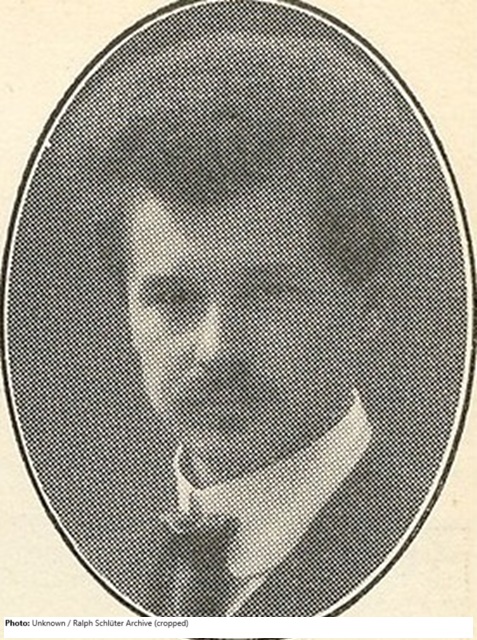
Ruben Örtegren was the son of a printing shop owner. He was an apprentice in a pharmacy in Malmö and earned a bachelor’s degree from the Stockholm University in 1907. Subsequently, he worked again in the pharmacy in Malmö. In 1916 he earned a master’s degree in chemistry and became a lecturer at Stockholm University and a teacher at a secondary school. From 1921 Örtegren worked in the Laboratory of the Royal Pharmaceutical Institute, where he also held courses in analytical chemistry. From 1935 he was a teaching assistant in Stockholm. He wrote several papers on botany and chemistry, including the first description of the parasitic fungus Cordyceps clavicipitis.
A member of Stockholms Stads Frivilliga Skarpskytteförenin and Djurgårdens Idrotts-Förenings, Örtegren competed in military and small-bore rifle events at the 1912 Stockholm Olympics, winning silver in the small-bore rifle, prone, 50 metres team event. He also had a keen interest in dog breeding and was a member of the founding board of the Swedish Dachshund Club. In 1926 he was awarded the Swedish Kennel Club’s Hamilton plate for his dachshund breed. With his wife Margareta Sofie (née Andersson) he had one son and one daughter.
 Sweden