| Roles | Competed in Olympic Games |
|---|---|
| Sex | Male |
| Full name | Aleksandr Nikolayevich•Dobrzhansky |
| Used name | Aleksandr•Dobrzhansky |
| Original name | Александр Николаевич•Добржанский |
| Born | 19 April 1873 in Tbilisi, Tbilisi (GEO) |
| Died | 15 November 1937 (aged 64 years 6 months 26 days) in Paris XXe, Paris (FRA) |
| NOC |  Russian Federation Russian Federation |
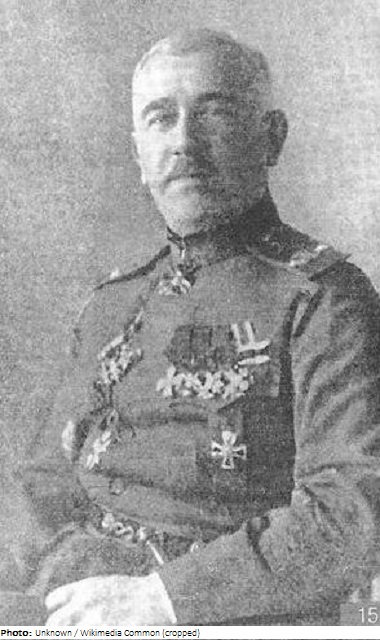
Born in Georgia Alexander Dobrzhansky came from a family of hereditary nobility. He graduated from the Tiflis Cadet Corps in 1891 and from the 2nd Konstantinovsky Military School in 1893. Subsequently, he was assigned to the 149th Black Sea Infantry Regiment. In 1894, he was transferred to the 1st Caucasian Rifle Battalion and two years later to the Life Guards Jäger Regiment.
In 1900, after being promoted to lieutenant, he graduated in oriental languages from the Asian Department of the Ministry of Foreign Affairs, where he studied Turkish, Persian, and Arabic. In 1904, he was appointed to be at the disposal of the Commander-in-Chief of the Caucasian Military Districtuntil 1913, when he was promoted to colonel.
As one of best shooters of his regiment, Dobrzhansky claimed the 1st Imperial Prize in 1899 and 1902 and the 2nd Imperial Prize in 1900 and 1903 at the shooting competition of officers at a target with a rifle. With the team of the Russian Empire, he took part in the 1912 Olympic Games, competing in seven rifle events. His best result was the fifth place in the running target, single shot, team event.
With the outbreak of World War I in 1914, Dobrzhansky was appointed commander of the armoured machine gun automobile division, the first armoured car division in Russian history. He was instrumental in the development of the division and he also led it into the first battle in November 1914. The success of this division under Dobrzhansky was greeted in Russia with enthusiasm and earned him the promotion to major general. He was awarded several classes of the orders of St. Stanislaus, St Anna and St. Vladimir and was appointed Chevalier of the Order of St. George and the Arms of St. George.
After World War I, he emigrated to France and continued to tinker with potential improvements of military equipment. In the last years, his health deteriorated rapidly, not the least due to the wounds received during the war, and eventually died in Paris. From the Père Lachaise cemetery his ashes were later transferred to Yugoslavia, from where his wife came.
| Games | Discipline (Sport) / Event | NOC / Team | Pos | Medal | As | |
|---|---|---|---|---|---|---|
| 1912 Summer Olympics | Shooting | RUS |
Aleksandr Dobrzhansky | |||
| Free Rifle, Men (Olympic) | 78 | |||||
| Military Rifle, Three Positions, Men (Olympic) | 71 | |||||
| Military Rifle, Men (Olympic) | 71 | |||||
| Small-Bore Rifle, Three Positions, Men (Olympic) | 33 | |||||
| Small-Bore Rifle, Disappearing Target, Men (Olympic) | 26 | |||||
| Running Target, Single Shot, Men (Olympic) | 33 | |||||
| Running Target, Single Shot, Team, Men (Olympic) | Russia | 5 | ||||
| Running Target, Double Shot, Men (Olympic) |