| Roles | Competed in Olympic Games |
|---|---|
| Sex | Male |
| Full name | Aleksandr Pavlovich•Mordovin |
| Used name | Aleksandr•Mordovin |
| Original name | Александр Павлович•Мордовин |
| Born | 3 February 1873 in St. Petersburg, St. Petersburg (RUS) |
| Died | 31 March 1938 (aged 65 years 1 month 28 days) in Borovichi, Novgorod (RUS) |
| NOC |  Russian Federation Russian Federation |
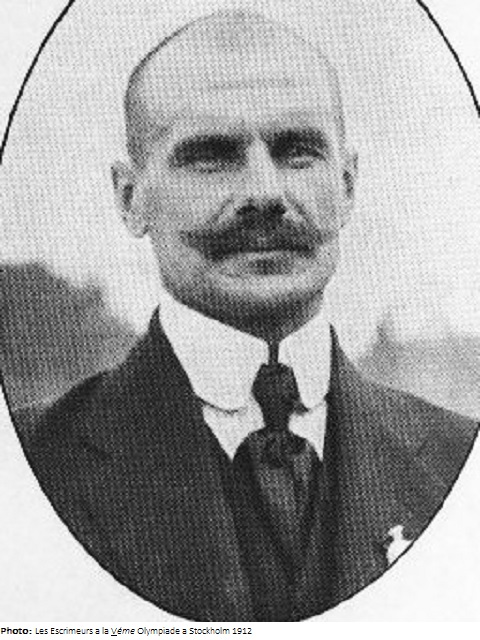
The son of a colonel, Aleksandr Mordovin graduated from the 1st Cadet Corps in 1891 and two years later from the Pavlovsk Military School. After serving in different infantry regiments, he was a lieutenant in the Pavlovsk Life Guards Regiment from 1898-1900. For the next two years, he was a member of the security guard of the Chinese Eastern Railway, and then returned to the Life Guards, first to the Pavlovsk, later to the Moscow regiments.
From 1909-14, Mordovin acted as head of the Main Gymnastics and Fencing School in the rank of a colonel. Beginning in 1899, he regularly competed successfully in fencing, gymnastics, and shooting. In the same year, he went on a six-month trip to various European countries to study their experiences in physical education in general and particularly in fencing. He won All-Russian championship titles in spadroon (1904, 1905) and foil fencing (1905). At the 1912 Olympic Games in Stockholm, Mordovin competed in the individual foil, individual sabre, and sabre team events - being eliminated in the first round of each - while also serving as head of the Russian sports delegation. With the outbreak of World War I, he returned from his position at the Main Gymnastics and Fencing School to active service in the army. He was awarded various degrees of the Orders of St. Stanislav, St. Anna and St. Vladimir.
After the war, Mordovin became a teacher at the Vsevobuch (“Universal Military Training”) organisation, teaching at various military schools, including the Soviet Military Main Gymnastics and Fencing School. He was appointed head of the physical education department at the Military Pedagogical Institute in Moskva (Moscow) and in 1923 was head of the fencing section at the Higher Military Pedagogical School of Physical Education for the Command Staff of the Red Army. Due to his age, he was then dismissed from the Red Army and worked as a librarian at a secondary school in Borovichi in the Novgorod Oblast. There, he was arrested in September 1937 by the NKVD (interior ministry and secret police of the Soviet Union) and just weeks later sentenced to death. He was executed in Borovichi.
| Games | Discipline (Sport) / Event | NOC / Team | Pos | Medal | As | |
|---|---|---|---|---|---|---|
| 1912 Summer Olympics | Fencing | RUS |
Aleksandr Mordovin | |||
| Foil, Individual, Men (Olympic) | =4 p7 r1/4 | |||||
| Épée, Team, Men (Olympic) | Russia | |||||
| Sabre, Individual, Men (Olympic) | =4 p8 r1/4 | |||||
| Sabre, Team, Men (Olympic) | Russia | =9 |